

.jpg)
Back pain has a way of taking over everything. It changes how you move, how you sleep, how you approach a workout, and how much mental energy you spend just trying to manage it. If you have been dealing with it for a while, you already know the frustration of trying different things, getting temporary relief, and watching it come back.
At 901PT, we help active adults in Memphis get to the actual source of their back pain and build a lasting path forward. Not a temporary patch. Not a list of generic exercises. A personalized, progressive plan built around how your body actually moves and what you are trying to get back to.
Your back is more capable than it feels right now. Let us show you what is possible.
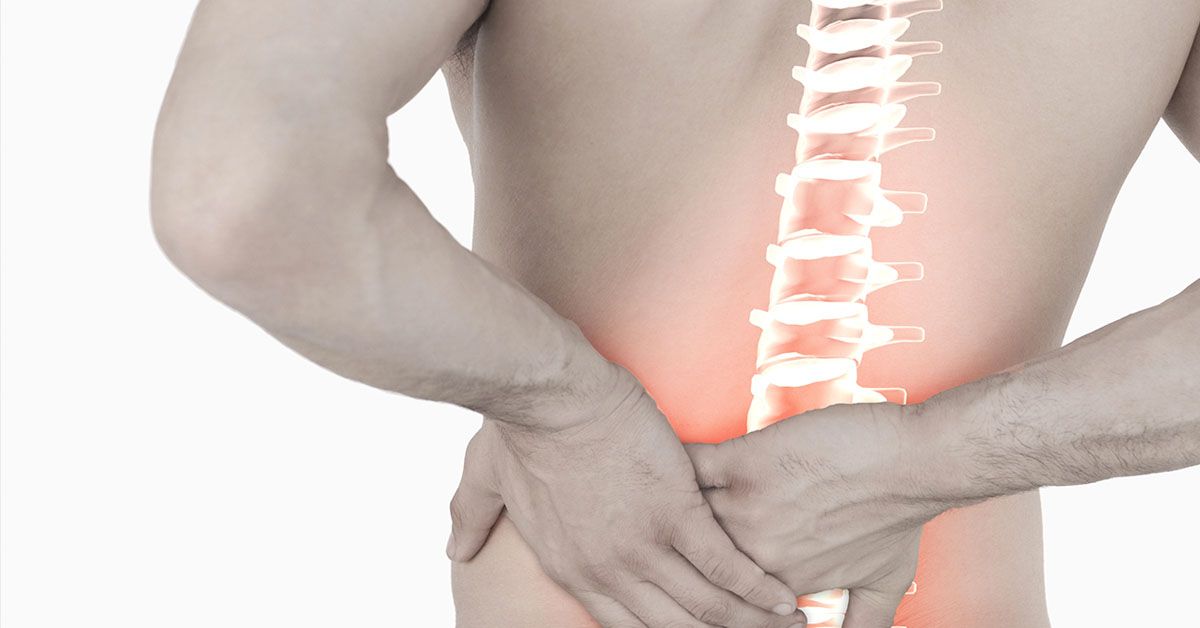
Back Pain Is Common. That Does Not Mean You Have to Accept It.
One of the most frustrating things about back pain is how isolating it can feel. You look fine. The imaging might not show anything conclusive. And yet everyday things like getting out of bed, sitting through a meeting, picking something up off the floor, or finishing a workout feel genuinely difficult.
Back pain presents differently for everyone. For some people it is a dull, constant ache that never fully goes away. For others it is sharp and sudden, showing up unpredictably and leaving them afraid to move freely. Some experience pain that radiates into the hips, glutes, or down the leg. Others feel stiffness that is worst in the morning and gradually loosens through the day.
What most of these experiences have in common is this: the pain is real, it is affecting your life, and there is almost always something meaningful that can be done about it. Back pain, even long-standing back pain, is rarely a permanent condition. It is usually a signal that something in how your body is loading, moving, or building strength needs to be addressed.
That is exactly what we are trained to find.
Why Back Pain Keeps Coming Back
Most people who have dealt with recurring back pain are not experiencing bad luck. They are experiencing the predictable result of a problem that was never fully addressed.
The body is remarkably good at compensating. When one area is not doing its job, something else picks up the slack. That works for a while, until it does not. When the compensation pattern breaks down, pain is usually what signals it.
Understanding what is actually driving back pain requires looking at more than just the back. We look at how the hips and pelvis are moving and loading. We look at core strength and how it is being recruited. We look at thoracic mobility, movement patterns under load, and the cumulative effect of how someone sits, trains, and moves through their day. Back pain is rarely caused by a single thing, and that is why single solutions rarely fix it.
Common contributors we see include:
A diagnosis or imaging finding is a starting point, not a destination. What matters most is understanding how that finding is affecting the way you move and what needs to change to reduce its impact.
Back pain shows up in a lot of different ways. You might relate to some of these more than others.
None of these are things you should have to keep managing around. They are signals worth taking seriously, and every one of them is something we have helped patients work through.
There is a version of physical therapy most people have already experienced. You get an evaluation, you are given a set of exercises to do mostly on your own, someone checks in periodically, and if things improve, great. If they do not, the assumption is that you just need more time or maybe a referral elsewhere.
That approach fails a lot of people with back pain. Not because the exercises are wrong, but because the process is not designed to truly understand the individual in front of it.
At 901PT, we do things differently from the first visit.
Your first session is spent understanding you. Your history, your movement patterns, your training load, your lifestyle, and how all of it connects to what you are experiencing. We do not just assess where it hurts. We assess how your whole body is contributing to the problem.
Every session is one-on-one with a Doctor of Physical Therapy for a full sixty minutes. No aides, no shared appointments, no fifteen-minute check-ins. The time is entirely yours, and it is spent making real, measurable progress.
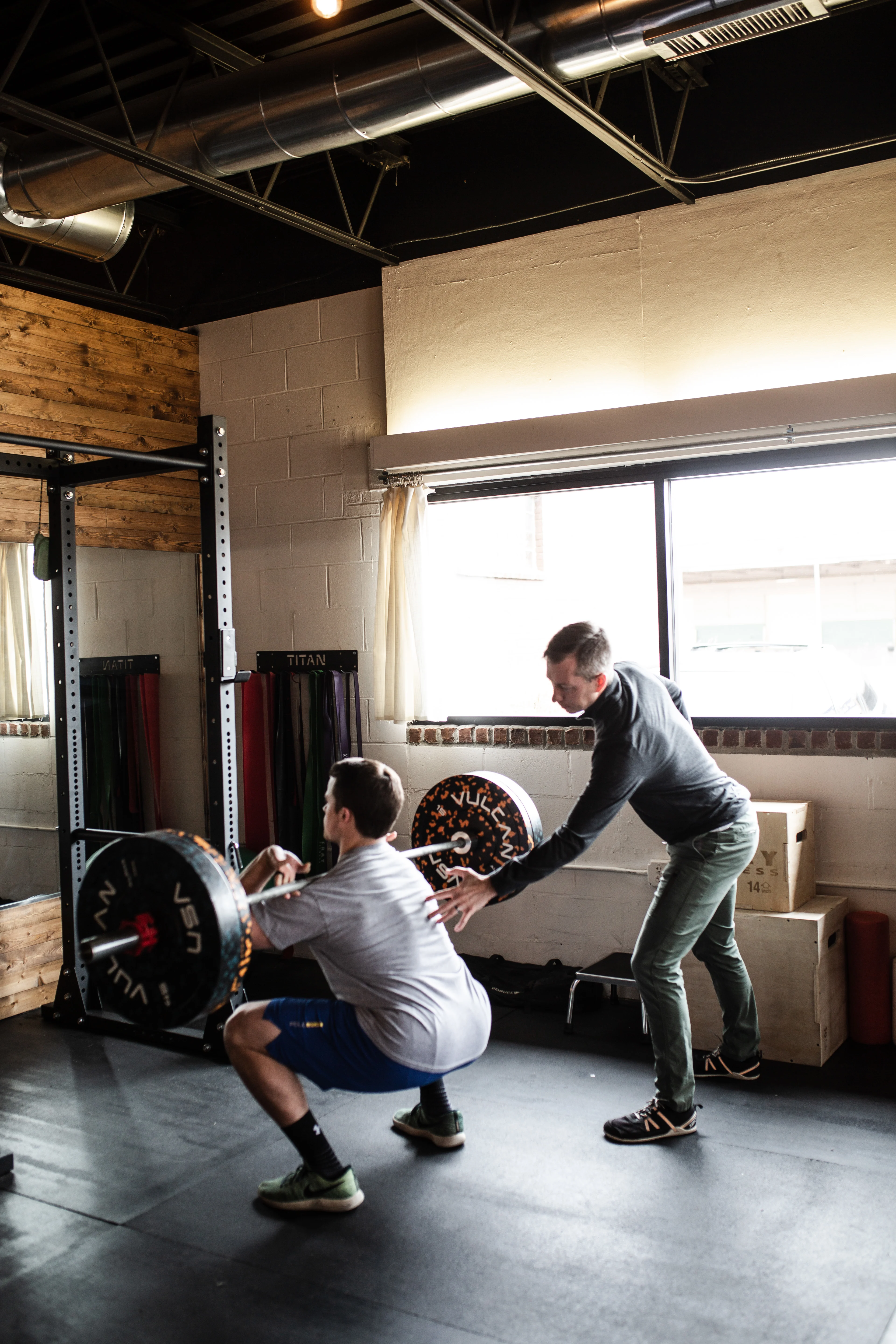
Back pain is almost always connected to a strength deficit somewhere. Whether it is the hips, the core, or the posterior chain, we build strength progressively and purposefully because that is what creates lasting stability. Pain relief is the first goal. Building a body that does not keep breaking down is the real one.
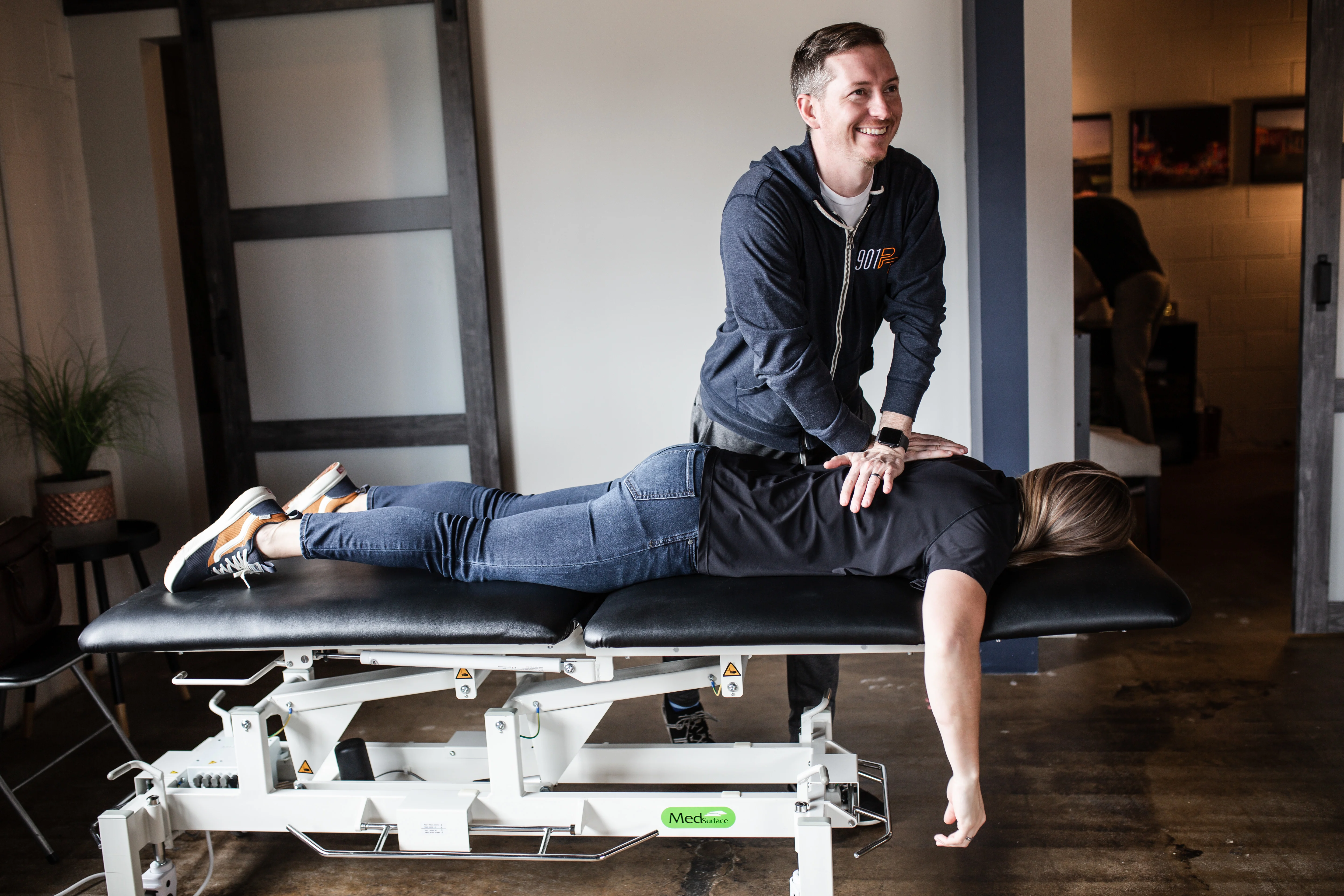
Hands-on treatment including joint mobilization, soft tissue work, and manual techniques is used where it genuinely helps, not as a default. We pair manual therapy with active rehabilitation because passive treatment alone does not create durable results.
Your plan changes as your body changes. We track how you are responding and adjust the progression accordingly. You are never stuck on the same exercises for six weeks while wondering if anything is actually working.
You will understand what is driving your pain, what the plan is designed to do, and how to make good decisions about your body between sessions. That clarity is not a bonus. It is part of the treatment. Patients who understand what is happening recover faster and stay healthier longer.
.webp)
"After years of chronic back pain I found this clinic and my world completely changed. With expert guidance I saw immediate reduction of my pain and an increase in my physical capacity. Back to squats and deadlifts. Not only did the team help to alleviate my injuries but also gave me the tools to build my body stronger. If you have the chance to get treatment at 901PT, take it. You will thank yourself."
— Neil J.
"The team has helped me eliminate some intense back and upper back pain and is proactively helping me become a runner. Everything is communicated in a way I can easily understand, and I am set up with simple but highly effective exercises that have me ready to train."
— Megan W.
Back pain is not one condition. It is a category that includes a wide range of underlying issues, each of which requires a specific and informed approach. We work with patients dealing with:
Disc issues are among the most commonly misunderstood back pain diagnoses. An imaging finding does not automatically dictate your prognosis. Many people with significant disc changes on imaging respond exceptionally well to physical therapy, and the research consistently supports conservative care as a first-line treatment.
Radiating pain, tingling, or numbness that runs from the lower back into the leg is typically sciatic in origin. We work to identify and address the source of nerve irritation, whether that is disc-related, muscular, or positional, and build a plan to reduce symptoms and restore normal function.
The sacroiliac joint is a common and frequently overlooked contributor to lower back and hip pain. Dysfunction here can be difficult to distinguish from other causes without a thorough assessment. When identified, it responds well to targeted manual therapy and specific strengthening.
Degenerative changes in the spine are a normal part of aging and do not automatically lead to persistent pain. Many patients with significant degeneration on imaging live active, pain-free lives. We help patients understand what their diagnosis actually means and build a plan focused on maintaining and improving function rather than managing decline.
Acute muscle injuries can be intensely painful and disorienting. We help patients move through the acute phase safely, restore normal movement patterns, and address the underlying contributors that led to the strain in the first place.
A vertebral slippage diagnosis can feel alarming, but many cases are manageable with the right conservative approach. Stability, strength, and load management are central to how we treat this condition.
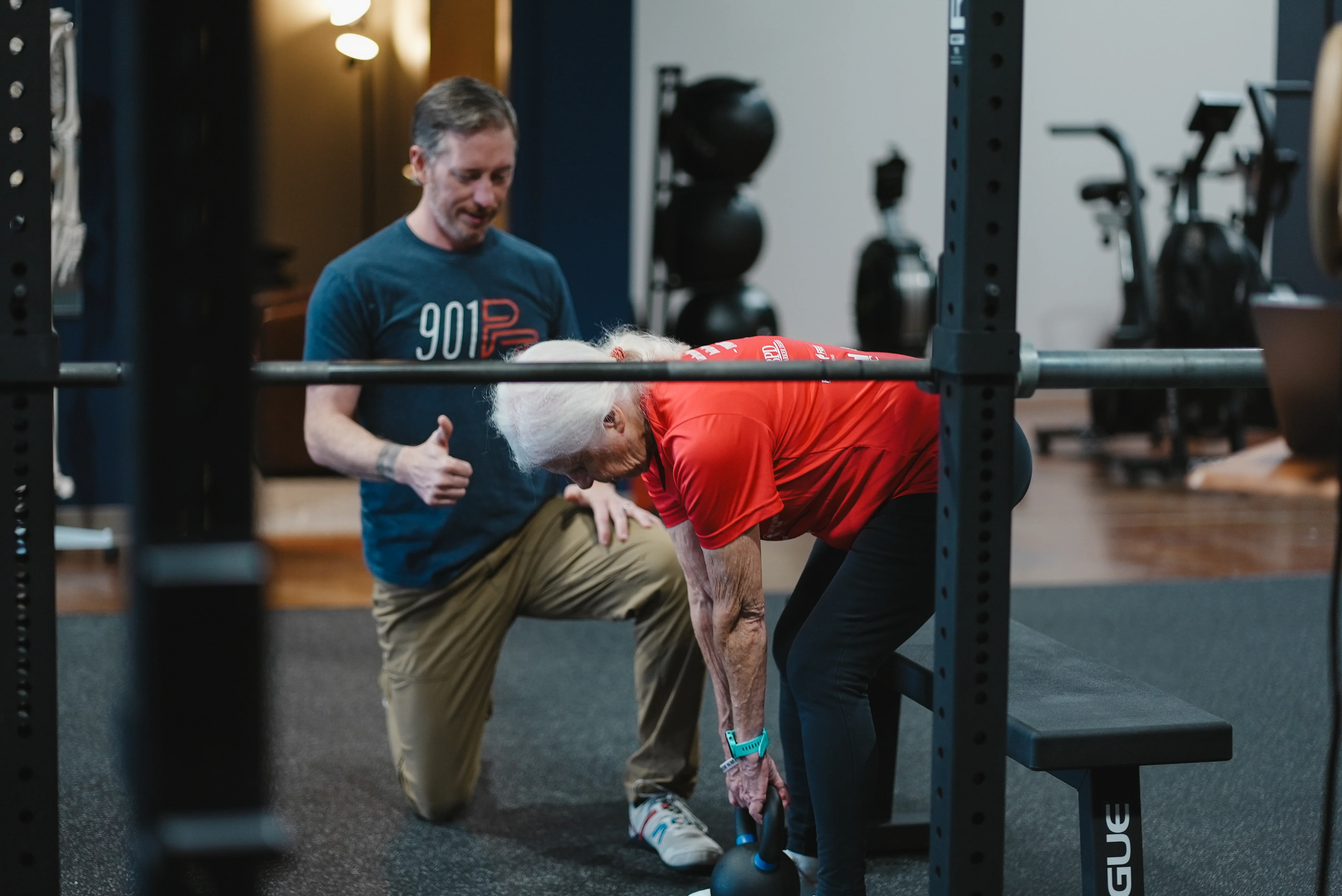
Back pain does not discriminate, and neither does our approach. We work with a wide range of people including:
If you are tired of working around your back and ready to actually address it, we are ready to help.
Memphis has no shortage of physical therapy clinics. What we hear most consistently from patients who come to us after trying other options is that they finally feel like someone took the time to actually understand what they were dealing with.
That is not a coincidence. It is the result of how we structured the practice.
The goal is not to keep you in physical therapy indefinitely. The goal is to get you strong, give you the tools to stay that way, and send you off with confidence in your body.
Why does my back pain keep coming back even after it improves?
Recurring back pain is almost always a sign that the underlying cause was never fully addressed. Feeling better is not the same as the problem being solved. Rest reduces pain by reducing load, but it does not fix the strength deficits, movement compensations, or mechanics that led to the pain in the first place. When you return to normal activity, those unresolved factors create the same conditions again. Lasting relief requires understanding and addressing what is actually driving the pattern, not just waiting for the symptoms to settle.
Do I need an MRI or X-ray before starting physical therapy?
In most cases, no. Imaging is useful in specific circumstances, but it is rarely necessary before beginning physical therapy for back pain. Research consistently shows that imaging findings do not reliably correlate with pain levels or predict outcomes. Many people with significant findings on imaging have no pain, and many people with significant pain have unremarkable imaging. A thorough clinical assessment tells us far more about what is driving your symptoms and what to do about it than a scan does.
Can I keep exercising while I have back pain?
Usually yes, and in many cases staying active is part of what helps. The key is knowing how to modify appropriately so you are not aggravating the issue while still maintaining your fitness and building the capacity your back needs. Complete rest tends to make things worse over time, not better. We will help you understand exactly what to keep doing, what to adjust, and how to progress so that exercise becomes part of your recovery rather than a risk to manage.
What if I have been told I have arthritis, a herniated disc, or that I might need surgery?
A diagnosis or imaging finding is a starting point, not a sentence. Many people with arthritis, herniated discs, stenosis, and other structural findings improve significantly with physical therapy and go on to live fully active lives. Surgery is sometimes the right answer, but it is far less often necessary than people are led to believe. We will look at your full picture, help you understand what your diagnosis actually means for your function, and give you an honest assessment of what conservative care can realistically achieve.
Your body is more resilient than you think.
If you have been dealing with pain for a long time, it is easy to start feeling like your body is broken or that certain things just are not possible anymore. We hear that a lot. One of the most important things we do is help you understand what is actually going on and rebuild your confidence in what your body can do. Most of our patients leave feeling stronger and more capable than they did before they got hurt.
What does a typical visit at 901PT look like?
Every session is a full hour, one-on-one with your Doctor of Physical Therapy. There are no aides and no shared sessions. Your PT will spend that time assessing how you are responding, progressing your plan, doing hands-on work where appropriate, and coaching you through the exercises that are moving the needle. You also have direct access to your PT between visits so you are never left wondering what to do if something comes up.
How long will it take to feel better?
It depends on what is driving your pain, how long it has been present, and how your body responds to treatment. Many patients notice meaningful improvement within the first few sessions. More complex or long-standing cases take longer to fully resolve. What we can tell you is that every plan is built to move forward, and we will be honest with you about what to expect and what progress should look like at each stage.
If back pain has been limiting your training, your work, or your everyday life, you do not have to keep working around it. There is almost always a path forward, and it almost always starts with a real understanding of what is driving the problem.
At 901PT, that is exactly what we are built to provide. One-on-one, expert care with a plan that is actually designed for you and a team that is invested in your long-term results.
Take the first step.
With over 350 public reviews, and every single one a five-star, we’re honored by the trust our Memphis clients place in us.


Facebook review
Facebook review

Google review
Google review
Google review